Michael Wallman for Berkeley City Council, District 8
Berkeley City Council · District 8
Change is on the way.
As a lifelong Berkeley resident, I can say decisively that our city needs urgent change, grounded in common sense policy and leadership that truly delivers results.
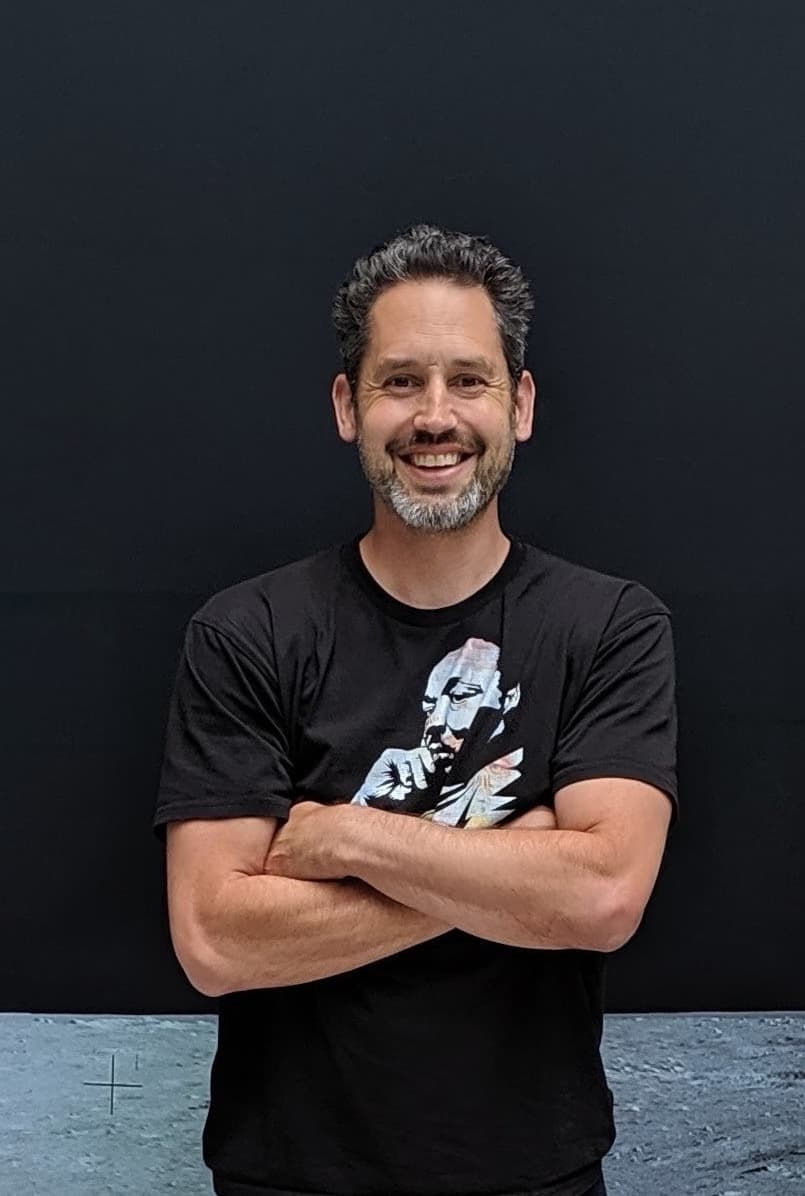
About Me
Berkeley is central to my story.
My parents — a Lebanese mother and Finnish father — met as graduate students at the International House. Born in Oakland, they brought me home as a newborn to a small apartment on Dwight Way. Soon after, we moved near Lawrence Hall, where my two sisters arrived. My mother worked as a librarian for the City of Berkeley and for the Berkeley public schools, and my father was a scientist and lecturer at Cal. Lacking any extended family in the U.S., our immediate neighbors and local community became my family.
I attended all of Berkeley's public schools, community college, and UC Berkeley, earning a degree in Electrical Engineering, Computer Science, and Material Science. While in college, I worked as a lab tech in downtown Berkeley and in the restaurant industry. Since graduating, I have helped found Berkeley-based startups and worked in big tech.
Today, my wife — a first-generation Mexican-American from East Oakland — and I are raising our two children on Panoramic Hill. We care for my mother-in-law in our home, while my mother and stepdad live near Monterey Market. Caring for this community is deeply personal to me.
Why I'm Running
Berkeley needs better.
For years, we have endured long and uncoordinated road and sidewalk closures, blocks of vacant storefronts, littered streets, failing infrastructure, unbalanced budgets, and leadership that is out of touch with local realities.
Despite adding thousands of housing units, rents remain high; meanwhile, BART and AC Transit ridership, along with school district enrollment, have all declined. While our leaders promised a car-free future supported by bikes and transit, the reality is a wave of ride-share and delivery drivers, sidewalks cluttered with electric scooters, crumbling roads, and a decade of development that has failed to lower costs in any meaningful way.
To build an equitable and vibrant Berkeley, we must reject this trajectory. The city needs representatives who understand new camera technologies, who rely on verified data for decision-making, who listen to their constituents, who can create local jobs, and who speak out against injustice, wherever it may lie. If you support this vision for our future, I ask for your vote.
Top of Mind
What I'm focused on for District 8
Tap any priority to read more.
1Housing For All
Berkeley's housing debate has become all-or-nothing. We need genuinely affordable, family-sized homes — not just dormitory-style blocks — and a streamlined permitting process that makes it easier to build for homeowners.
Housing For All
Berkeley's housing debate has become all-or-nothing. We need genuinely affordable, family-sized homes — not just dormitory-style blocks — and a streamlined permitting process that makes it easier to build for homeowners.
The discourse surrounding local housing has devolved into a bitter shouting match, characterized by name-calling and deep neighborhood resentment. Much like the gridlock in Washington D.C., there is little room for nuanced debate; instead, we are presented with an all-or-nothing approach to a complex crisis.
As a lifelong Berkeley resident, I have witnessed the impacts of gentrification firsthand. My kindergarten class photograph serves as a reminder of a city that was once a vibrant tapestry of diverse journeys—a place that was certainly tough, yet undeniably beautiful and full of character.
Today, we are grappling with hyper-gentrification, where the dream of homeownership has slipped out of reach even for middle-class families in our community.
While I do not claim to have every answer or a total grasp of every complex zoning regulation, the data I have examined is deeply concerning:
- Berkeley continues to fall short of its targets for both low-income and middle-income housing.
- A significant majority of new units are rentals, eroding the traditional role of property as a tool for local wealth generation.
- Development is heavily skewed toward one-bedroom and studio apartments rather than family-sized homes.
- Parking mandates have been removed, and essential spaces are frequently excluded to cut development costs.
The convergence of these factors makes Berkeley increasingly uninhabitable for many. Families are being squeezed out, as are tradespeople requiring vehicles for work, those commuting beyond the BART network, and anyone seeking to build long-term equity.
My perspective is straightforward: unless the city makes direct investments in truly affordable housing, partners effectively with developers, and helps homeowners scale their own properties, Berkeley will be defined by massive, dormitory-style blocks that fail our community.
Housing at Scale
One initiative I care deeply about is fundamentally transforming our city's permitting process for homeowners. Personal experience demonstrates that constructing residential improvements remains exceptionally challenging, regardless of existing zoning laws. By removing administrative hurdles for resident-driven projects, we can unlock housing expansion at true community scale across our roughly 20,000 single-family parcels. This process of economies at scale enables a more distributed approach to development, rather than putting all our eggs in one basket — a strategy that has ended very badly in the downtown district. Empowering local homeowners also directly benefits our neighborhood economy, as area contractors are uniquely qualified to raise existing structures, finish basements, and construct accessory dwelling units.
2Small Business Support
Our empty storefronts are a policy failure. Protect the neighborhood commercial districts that keep Berkeley livable.
Small Business Support
Our empty storefronts are a policy failure. Protect the neighborhood commercial districts that keep Berkeley livable.
Small businesses serve as the cornerstone of a thriving local community, going far beyond their role as economic drivers. Operating on thin profit margins makes these local shops uniquely vulnerable to operational conditions—including parking access, foot traffic, neighborhood cleanliness, and natural light.
The shortcomings of our current policy approach are glaringly evident. A stroll through Downtown Berkeley along Center Street reveals a heartbreaking wave of storefront vacancies. This problem spreads far beyond downtown: both historic structures and modern commercial spaces along University and San Pablo Avenues reflect the exact same concerning decline.
Although vibrant commercial pockets persist in areas like Elmwood, 4th Street, Hopkins, and the Alcatraz-Adeline intersection, these critical business clusters face ongoing threats.
We must safeguard these essential neighborhood hubs from the broad and targeted upzoning measures typical of major transit corridors. Sustainable growth in these sensitive zones demands closer collaboration with commercial stakeholders, prioritizing owner-occupied units and requiring construction methods that minimize disruption to pedestrian flow.
By enacting these targeted safeguards, Berkeley can foster commercial districts that are both economically resilient and deeply inclusive.
To fill lingering commercial vacancies, we need streamlined programs for faster, lower-cost small business onboarding, such as flexible pop-ups and short-term leases without major upfront or long-term commitments. Sharing foot and vehicle traffic data will also help business owners choose optimal locations to serve the community.
3Cal as a Good Neighbor
No district feels Cal's decisions more than District 8 — we need a representative who works with the university and defends the neighborhood.
Cal as a Good Neighbor
No district feels Cal's decisions more than District 8 — we need a representative who works with the university and defends the neighborhood.
Due to its close proximity to Cal, District 8 is particularly impacted by the university's decisions. Cal is the 800-pound gorilla in the room—a complex maze of bureaucracy and regulations, much like the city itself. For many residents, it remains a love-hate relationship.
- Our housing crisis in Berkeley was driven in part by increasing student admissions without a corresponding, joint housing plan created alongside the city.
- The university continues to push development deep into Strawberry Canyon, constructing stadiums illuminated for modern broadcast athletics.
- Financing the stadium project has created a severe debt burden.
- All of this development sits directly atop the Hayward Fault and right next to Panoramic Hill, one of the most high-risk wildfire neighborhoods in the state.
Ultimately, we need a representative who works closely with the University while steadfastly defending the best interests of Berkeley and, above all, District 8 residents.
Also on the agenda
4Claremont Slow Down
Claremont Avenue outside an elementary school needs a real signal and real traffic safety — not temporary plastic posts.
Claremont Slow Down
Claremont Avenue outside an elementary school needs a real signal and real traffic safety — not temporary plastic posts.
Following a recent neighborhood association meeting in the uplands, a resident expressed profound frustration over hazardous vehicular movement throughout the district. Having frequently escorted my own children across Claremont Avenue en route to John Muir Elementary, I have long questioned why an active elementary zone lacks a proper, fully functional signal.
Observing the intersection outside Star Market the following morning confirmed those exact anxieties. Commuters rush down Claremont — already driving as if merged onto the highway — distracted by cellular devices while cyclists nervously negotiate the thoroughfare. While recognizing Claremont serves as a vital arterial route for neighbors north of Ashby Avenue, the temporary yellow flexible posts fail to slow drivers and merely generate further uncertainty.
If entrusted with representing our community, I will promptly institute a comprehensive data collection initiative to capture precise pedestrian and vehicular metrics, alongside demanding dedicated traffic safety enforcement during peak morning commute windows. Our neighborhood deserves an actionable, data-driven strategy.
5Wildfire Safety in the Hills
Real evacuation plans and safety standards for District 8's wildland edge — before the next fire.
Wildfire Safety in the Hills
Real evacuation plans and safety standards for District 8's wildland edge — before the next fire.
District 8's wildland edge is exposed. Build real evacuation plans and resident safety standards with the fire department and the university — before the next fire, not after it.
6Privacy, Cameras, and Smart Policing
Public safety is a civic duty — not an excuse for surveillance networks that outlive their promises and put our privacy at risk.
Privacy, Cameras, and Smart Policing
Public safety is a civic duty — not an excuse for surveillance networks that outlive their promises and put our privacy at risk.
Residents should not have to deploy private surveillance systems because of crime; public safety remains a fundamental civic duty. While no one argues against alerts for stolen cars or violent fugitives, that is not what this technology is about. We are witnessing the creeping importation of authoritarian monitoring models — reminiscent of how governments like China use facial recognition to track citizens and suppress dissent — right into our own backyards.
Although proponents claim current cameras are restricted to license plates and basic vehicle attributes, hardware outlives software policies. As AI models rapidly evolve, these systems will easily cross the line into identifying individuals, tracking anyone in the city at any time, and morphing into automated data brokers that harvest our daily movements. Most concerning is that neither local police departments nor municipal governments possess the cybersecurity expertise required to defend against a future where sophisticated AI agents and foreign state actors can effortlessly breach networked municipal databases.
If any cameras are used at all, they should be strictly closed-circuit and limited solely to anonymous data like traffic counts and speed, completely devoid of vehicle or user identifications. Ultimately, the speculative benefits of these surveillance networks do not outweigh the profound dangers to our civil liberties and digital security. Rather than investing heavily in fragile, invasive technology, I recommend that the council instead direct those resources toward hiring additional police officers.
Moonshots
Big ideas for all of Berkeley
These reach beyond District 8. They're long shots that would take real partnership to pull off — and they'd make the whole city better.
Ranked-Choice Voting
Not your first choice? Rank Wallman anyway.
Berkeley uses ranked-choice voting for City Council races — you can rank up to five candidates in order of preference, and you don't have to rank them all. Ranking someone else first never hurts them, and ranking Wallman second (or third, or lower) never hurts your top choice either. If District 8 is a crowded field this cycle, use every ranking you've got.
Frequently Asked
Quick answers about the race
Who is Michael Wallman?
Michael Wallman is a lifelong Berkeley resident and engineer running for Berkeley City Council, District 8, in the November 3, 2026 election.
What district is Michael Wallman running for?
Berkeley City Council, District 8.
When is the election?
Election Day is November 3, 2026.
Who is Michael Wallman running against?
Michael Wallman is challenging incumbent District 8 Councilmember Mark Humbert.
What are Michael Wallman's top priorities?
Small business, housing that stays affordable, and holding UC Berkeley accountable as a neighbor — plus protecting tenants from displacement, wildfire safety in the hills, and smarter, privacy-respecting policing.
How can I donate to Michael Wallman's campaign?
Online via ActBlue or by check at wallmandistrict8.com/donate. Berkeley residents giving $10–$60 can have their contribution matched 6-to-1 through the city's Fair Elections program.
How can I volunteer for the campaign?
Sign up at wallmandistrict8.com/join.
How do I contact the campaign?
Email info@wallmandistrict8.com or use the contact form at wallmandistrict8.com/contact.
Look It Up Yourself
Official sources for District 8 voters.